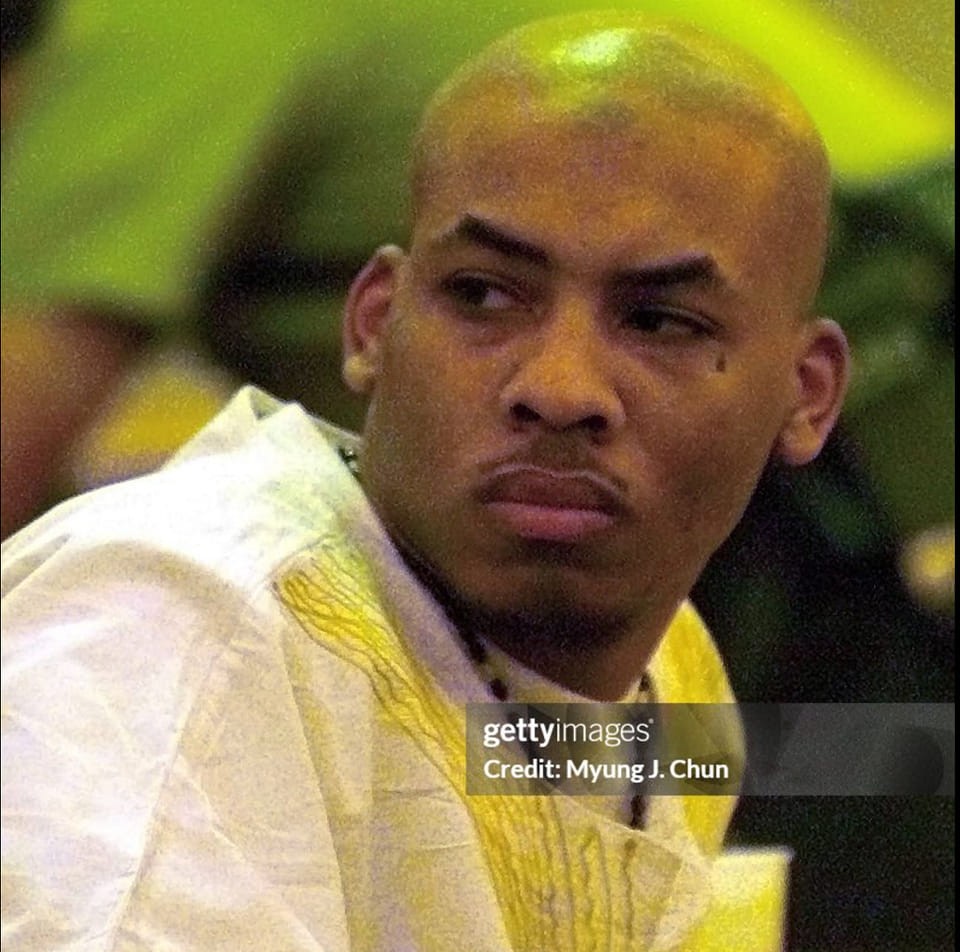
| Name and Address: |
Kirell Taylor, CDCR#: T35161
24900 State Highway 202
Tehachapi, CA 93581 |
BIRTHDATE: |
9/21/1975 |
| AGE: |
50 |
|
|
|
|
| RACE: |
Black |
GENDER: |
Male |
| HEIGHT: |
5'7 |
WEIGHT: |
190 |
| EYE COLOR: |
Brown |
HAIR COLOR: |
Black |
|
|
|
|
| CONVICTED OF: |
Murder |
RELEASE DATE: |
Life |
| |
|
|
|
| AD POSTED: |
2/2/2026 |
AD EXPIRES: |
1/28/2027 |
Description: FACTUAL ALLEGATIONS
(1) Petitioner hereby requests that the Court issue an order for the appointment of counsel to represent petitioner in light of the grounds presented below.
(2) Petitioner submits these grounds pursuant to the California Racial Justice Act (RJA). As amended, including Subdivision (c) of Assembly Bill 1071 (Regular Session 2025–2026), effective January 1, 2026, the Legislature recognized that courts have failed to find a prima facie showing or a violation in cases where individuals in the prosecution have used dehumanizing and othering language such as “terrorist.”
I. Relevant Pretrial Proceedings
(3) Petitioner represented himself both prior and during trial. During pretrial proceedings before Judge Rosenblatt, petitioner—who is a Black African American Muslim (Shia)—filed a motion for a Change of Venue. Petitioner asserted several grounds, including "his prior membership in an organization called the Moorish Islamic Empire of the West, which petitioner believed could arouse community hostility in the predominantly Christian and Jewish communities in the San Fernando Valley district. Petitioner further alleged repeated stereotyping of Muslims by sheriff deputy bailiffs, including racial and religious slurs in petitioner’s presence. Petitioner also asserted that, based on the victim being white and petitioner being Black, petitioner believed there was a grave possibility he would not receive a fair trial in the San Fernando Valley Judicial District."
(4) Prior to the 9/11 terrorist attacks, petitioner made several references to “terrorism” during pretrial proceedings. On May 16, 2001, petitioner stated to Judge Rosenblatt: “I implore the court on my knees, begging the court to not treat me like I am the black Timothy McVeigh and at least reconsider paying Lawrence Sanchez at the county’s expense. I believe if the government is allowing Timothy McVeigh to enjoy the due process of this country, I think the same effect ought to be imparted in this case.” (RT V-4, Lines 6-14.)
(5) On another occasion petitioner stated to Judge Rosenblatt: “I told you, your honor, I was being treated like a black Timothy McVeigh.” (RT W-27, Lines 3-6.)
(6) On June 14, 2001, Judge Rosenblatt conditionally granted petitioner’s request to wear a kufi, a Muslim religious hat, in court during trial, subject to search procedures. The court asked petitioner to address his motion and the following colloquy ensued:
DEFENDANT: “I’m biased — I’m biased already. I’m black. I’m Muslim. I’m considered everything under the sun.”
THE COURT: “Do you wish to address the Kufi motion?”
DEFENDANT: “Deny it. You’ve been denying everything else.”
THE COURT: “Okay.”
DEFENDANT: “You know it’s personal. This is very personal. You know you’re prejudiced against me.”
THE COURT: “If you think I’m prejudiced, you know the law... With respect to Mr. Taylor’s kufi motion, it is denied, except that the court will permit Mr. Taylor to wear his kufi in court, if it has been provided in advance to the Sheriff’s department, so that it can be searched and it is held as any other clothing would be held here in court.” (CT 354-55, 220-21; 259; RT W-21, 23.)
(7) During pretrial proceedings, petitioner’s “fiancé in London U.K.”, Saima Hussein, was referenced in the record. (See RT W-30, Lines 11-14.) Petitioner contends that, during 2000–2001, he and Saima Hussein were attempting to alert authorities about an approaching terrorist attack. Petitioner further contends he received materials he believed to be related to planned attacks.
(8) In support of the above, petitioner alleges that a large Royal Mail envelope was stamped/received by mailroom workers at Men’s Central Jail on June 14, 2001, and later received into petitioner’s hands on June 19, 2001. Petitioner alleges the envelope contained schematics and writings he believed were connected to threats against U.S. targets.
(9) Petitioner further alleges that, to ensure the envelope existed in an official file and could later be verified, petitioner attached the envelope to a motion filed at the Van Nuys Courthouse on or about July 11, 2001. Petitioner alleges he did this so that the existence and provenance of the envelope could be corroborated through official records.
(10) Petitioner alleges that he also wrote an ex parte letter dated June 19, 2001 (Juneteenth) to Judge Rosenblatt. Petitioner further alleges that on the same day he mailed the letter along with a self-addressed stamped envelope to Hon. (Ret.) Joseph Reichmann so the letter could be reviewed and mailed onward. The letter written by petitioner stated in substance:
“Dear Mrs. or Ms. Rosenblatt, since you have some strong inclination about me being insane or disturbed by some sort of psychological impediment and insist that I engage in a mental diagnosis. I’ll tell you what we’ll do so I can bypass any further embarrassment... Don’t be surprised when I drag OSAMA BIN LADEN in your courtroom. But don’t hold me for kidnapping because I want five million dollars. MY SILENCE HOLDS MUCH VOLUME! DO WHAT YOU WILL!”
(11) Petitioner alleges that his statements about capturing Osama Bin Laden were not intended as a threat, but as a claim that he was trying to alert authorities to impending violence. Petitioner notes that THE 9/11 COMMISSION REPORT describes that in "the spring of 1998 the CIA Counterterrorism Center was developing a plan to capture Osama Bin Laden." (9/11 Commission Report, pp. 110–111.)
(12) With respect to petitioner’s “Osama Bin Laden” letter, petitioner alleges that Hon. Reichmann responded in writing advising petitioner, "it was not a good idea to send the letter because it would not advance petitioner’s cause and could end up hurting it," and asked petitioner to keep him posted. Petitioner alleges he later made the correspondence part of the court record. (See RT Z-7, Lines 4-10; CT NO. 000527.)
(13) On July 18, 2001, Judge Rosenblatt stated on the record the following:
THE COURT: “I received yet another letter this morning from Mr. Taylor.... It’s a complaint about the conditions in the jail. I’m going to ask him to use the appropriate procedure on that.”
DEFENDANT: “The sheriff’s department last week tried to kill me. What do you mean? You just read the letter.”
THE COURT: “The letter that was submitted by the defendant alleges that the deputies in the jail did certain things to him —”
DEFENDANT: “Put a rope around my neck. You know, it’s right there, your honor.”
THE COURT: “It is, and I’m trying to save time. — And put him in the hole and took his property.”
DEFENDANT: “If I write a complaint or an appeal, the jail won’t answer me.... I guess they consider me some wise and intelligent NIGGER.”
THE COURT: “We will try and address this issue the next time that you are here in court.” (RT X-1, X-5, X-6, X-18.)
(14) Petitioner alleges that the issues raised in his letter regarding the jail were not resolved before the case was later reassigned to Judge Michael R. Hoff.
(15) Petitioner alleges that in the first week of August 2001 he sent additional correspondence regarding his concerns to Hon/ Reichmann, that provided in relevant part, "Never mind my cause. How about me trying to adhere to the cause of preventing an approaching terrorist attack on our soil."
(16) At court, petitioner alleges he attempted to address his concerns confidentially and sought assistance in arranging communication with federal authorities. On or about September 4, 2001, Judge Rosenblatt stated in open court, “I’m not reading letters from you any more... please, no ex parte communication.” Petitioner alleges the case was thereafter transferred to Judge Michael R. Hoff. (RT Z-22, Lines 17-22; W-9, Lines 9-18; W-20, Lines 1-9.)
(17) On September 5, 2001, petitioner was ordered into trial proceedings before Judge Hoff. Petitioner instructed his mother, Janice Marie Beetis-Taylor, to bring petitioner’s clothing for trial according to his traditional "Islamic culture." Petitioner alleges the attire was provided to the bailiffs, searched, and worn during jury selection. Jury selection began on Thursday, September 6, 2001.
(18) Petitioner further alleges that on or about September 6, 2001, he made a telephone call from jail and contends he spoke to Mohammed Atta. Petitioner alleges that during that call he was informed in coded language that attacks would occur on September 11, 2001, and could not be postponed. Petitioner alleges he attempted to contact the FBI thereafter. Petitioner alleges that any corroboration of this account would be reflected, if at all, in jail phone logs/recordings and related government records.
PETITIONER’S MOTION FOR “DISCOVERY” MATERIALS IS HEREBY INCORPORATED FOR A COPY OF THE REPORTER’S TRANSCRIPT TO THE VOIR DIRE PROCEEDINGS.
First Argument (Voir Dire / Post-9/11 Screening)
(19) On September 7, 2001, during voir dire, petitioner—while dressed in Islamic attire—asked a Christian juror how he would feel "to see in the news and media" during petitioner’s trial "a terrorist attack committed by so-called Muslims". Petitioner then exercised a peremptory challenge and dismissed the juror. Petitioner alleges he did so because he wanted to create a record reflecting his concern that anti-African American Muslim bias could affect the panel if a terrorist attack occurred during trial.
(20) Petitioner alleges that because of the extraordinary context and the record created during voir dire, a copy of the September 7, 2001 voir dire transcript is necessary to evaluate potential bias issues and petitioner seeks such materials pursuant to AB 1071 and the RJA.
(21) The 9/11 Commission Report discloses at page 244 that "Binalshibh advised Atta that Bin Laden directed that the other operatives not be informed of the date until the last minute,' and also states at the Preface on page xvii that "We have not interviewed every knowledgeable person or found every piece of paper. New information inevitably will come to light." Petitioner alleges that in light of the record created in his own proceedings, he seeks discovery into whether transcripts or materials from his voir dire were ever obtained by or shared with any agency, or whether any such materials exist in agency files.
(22) As the Supreme Court of California acknowledged in People v. Cash, “Here defendant cannot identify a particular biased juror, but that is because he was denied an adequate voir dire....” (People v. Cash (2002) 28 Cal.4th 703, 723.) Petitioner relies on this principle insofar as his ability to identify specific juror bias depends on what voir dire occurred and what follow-up screening was allowed.
AS AMENDED, THE CALIFORNIA RACIAL JUSTICE ACT IS INVOKED AT PENAL CODE SECTION 745(a)(1)–(2).
II. Relevant Trial Proceedings
(23) On September 11, 2001, petitioner’s trial was postponed due to the 9/11 terrorist attacks. (CT No. 000544.)
(24) On September 12, 2001, after jurors and alternate jurors had been sworn (RT 212, 214), the following exchange occurred outside the presence of the jury:
DEFENDANT: “I’m going to open the jury up and talk about and voir dire them AGAIN about the incident that happened yesterday based on me being Muslim.”
THE COURT: “I’m going to take care of that.”
DEFENDANT: “If they have a problem with it and they are prejudice[d], I’m kicking them off the panel.”
THE COURT: “I’m going to take care of that, okay?”
(25) Petitioner alleges that his request to re-voir dire jurors on September 12, 2001 was based on the fact that three business days earlier, during voir dire, petitioner had raised the subject of a terrorist attack by "so-called Muslims" occurring during petitioner’s trial and being "reported in the news and media."
(26) On September 12, 2001, Judge Hoff stated to jurors collectively:
THE COURT: “Okay, good afternoon, welcome back. Defendant is present [in Islamic clothing], the People are represented by Ms. Samuels. [¶] Ladies and gentlemen, as we all know something horrible happened yesterday, and the real question I have for you is anybody going to let that interfere with giving both sides a fair trial in this case?”
The record reflects: “The jurors answered in the negative.” (RT 233.)
(27) Petitioner alleges that this screening consisted of a single collective question and did not include individualized questioning designed to identify bias specific to petitioner’s visible identity as a Black Muslim in Islamic attire in the immediate aftermath of 9/11.
(28) Petitioner alleges that he repeatedly sought an opportunity to screen jurors for potential anti African American Muslim bias after 9/11, and that the record reflects his stated reason: “based on me being Muslim.” (RT 212–214.)
(29) Petitioner alleges that the RJA prohibits the State from seeking or obtaining a conviction on the basis of race, ethnicity, or national origin, and that a violation includes circumstances where a judge, attorney, law enforcement officer, or juror exhibits bias or animus, including through discriminatory or coded language that references physical appearance, culture, ethnicity, or national origin. (Pen. Code § 745.)
(30) Petitioner alleges that because his identity was visible in court through religious attire and because of the timing (immediately post-9/11), petitioner reasonably believed this was a heightened period of risk for anti-Muslim bias and that meaningful screening was necessary.
(31) Petitioner alleges that jurors may properly be interrogated on racial prejudice. (Ham v. South Carolina, 409 U.S. 524, 525-527.) Petitioner alleges that his request to question jurors after 9/11 was directed to bias that could affect petitioner due to petitioner being Muslim and visibly so in court.
(32) Petitioner does not use the phrase “Black Muslim,” because a black Muslim is defined as “a member of a chiefly black group that professes Islamic religious belief.” (Merriam-Webster’s Dictionary.) Petitioner does not ascribe to the Nation of Islam.
(33) Petitioner alleges this case arises from the historical backlash against Muslims of color in the immediate aftermath of 9/11. Petitioner alleges that retaliation and prejudice against persons perceived as Muslim was widely reported and foreseeable at that time.
(34) Petitioner alleges that despite petitioner’s stated concerns, the court proceeded after asking the jury a single collective question and did not conduct follow-up questioning aimed at identifying jurors who could not be fair due to anti-Muslim bias.
(35) Petitioner alleges that under the RJA, petitioner need not prove purposeful intent; petitioner alleges the statute focuses on whether covered actors exhibited bias or animus, including in ways that may be unintentional but actionable under the statute.
(36) Petitioner alleges the record supports the following sequence: petitioner asked to re-voir dire jurors based on being Muslim (RT 212–214); the court indicated it would “take care of that”; the court asked a single collective question; the record reflects a collective negative response; and trial proceeded. (RT 233.)
(37) Petitioner cites People v. Cooper, 2024 WL 4850120 [*13] fn. 7, regarding analysis of cultural/identity references under the RJA, to illustrate that identity references may be scrutinized under § 745 depending on context.
Second Argument (Post-9/11 Events / Courtroom and Custody Conduct)
(38) Petitioner alleges that on September 12, 2001, after court recessed, petitioner was transported back to Men’s Central Jail. Petitioner alleges that bailiffs at Van Nuys Courthouse communicated to sheriff deputies at Men’s Central Jail that petitioner was somehow connected to the 9/11 attacks. Petitioner alleges that upon arrival, sheriff deputies used force against petitioner. Petitioner further alleges that objective corroboration of these events would be reflected, if at all, in jail incident reports, medical records, transport records, and related logs.
(39) On September 13, 2001, petitioner made an oral motion for mistrial. The following exchange occurred outside the presence of the jury:
DEFENDANT: “...If any terrorism was to occur or that they read in the paper would they be biased to that?... I tried to give you judges... many innuendos about who I am... I have not killed Christopher Rawlings, but I do take complicity of however many deaths that’s occurred... Ask [detective] Purdy... did I speak on... OSAMA BIN LADEN... You need to forward that to federal authorities.”
THE COURT: “Okay.”
DEFENDANT: “You need to forward that to federal authorities.”
THE COURT: “I’m sure somebody will look in that.” (RT 292–295.)
(40) Later that afternoon, petitioner again sought a mistrial outside the jury’s presence:
DEFENDANT: “I would like to ask for a mistrial based on the overlapping circumstances in this case, the way I’m dressed [in Islamic attire]... I don’t think I’m going to get a fair trial.”
THE COURT: “Well, if you remember, I asked all the jurors before we started and they said they could be fair... Nobody knows, at least I don’t know, who caused the atrocities that happened in New York and Washington.”
DEFENDANT: “That could have been prevented by your leave.”
THE COURT: “Well, that’s what you say. So you made your motion and I’m going to deny it and we’re going to continue.”
(41) Petitioner alleges that his mistrial requests were based on his visible identity in court (Islamic attire) and the timing immediately after 9/11. Petitioner alleges he sought jury screening and court intervention because he believed the risk of prejudice was acute.
(42) Petitioner alleges that the record of his repeated pleas reflects concerns rooted in his intersectional and visible identity as an African American Muslim in religious dress, rather than abstract theology.
(43) Petitioner cites scholarly sources addressing how religion and race can overlap and how certain religious minorities can be racialized in public perception, including Joshi (2006) and Hammer (2018), and related materials discussed below, to provide context for why visible religious dress may trigger bias tied to perceived ethnicity or national origin.
(44) Petitioner alleges that courts have recognized religious bias may overlap with racial bias, and that categories of race and ethnicity can blur with religious beliefs, particularly where public perception treats a religious group as a racialized category.
(45) Petitioner alleges that scholarship describes the racialization of Muslims in the United States and emphasizes how “Muslimness” can be read onto racialized bodies through beards, clothing, complexion, language, or head coverings.
(46) Petitioner alleges these issues matter here because petitioner appeared in Islamic clothing and kufi, which petitioner alleges aligned with stereotyped perceptions of Muslims in the immediate post-9/11 period.
(47) Petitioner further alleges that Islamophobia can intersect with anti-Black racism and may intensify the targeting of Black Muslims.
(48) Petitioner alleges that on September 13, 2001, when petitioner again raised prejudice concerns, the court responded, “Nobody knows, at least I don’t know, who caused the atrocities....” Petitioner alleges that this response did not address petitioner’s stated concern about juror bias against Muslims in the immediate aftermath of 9/11 and did not lead to additional individualized screening.
(49) Petitioner alleges that other courts in similar historical contexts have conducted more careful juror screening for bias after high-profile terrorism events and, when necessary, delayed proceedings to protect fairness. Petitioner cites the authorities and reporting referenced below for comparison and context.
(50) Petitioner alleges that under the totality of circumstances—petitioner’s visible Islamic attire, the timing immediately after 9/11, petitioner’s repeated requests to screen for bias, and the limited collective screening reflected in the record—petitioner alleges there is a plausible basis to investigate whether bias affected the fairness of petitioner’s trial.
Third Argument (Prosecutor “Terrorist” Language)
(51) Two days after 9/11, during an exchange outside the presence of jurors while addressing scheduling matters, petitioner alleges that the prosecutor, Ms. Samuels, turned toward petitioner and stated: “WHO IS GOING TO KNOW WHEN YOU ARE GOING TO HAVE A TERRORIST ATTACK, YOU KNOW?” (RT 405.)
(52) Petitioner alleges that Ms. Samuels’ use of the phrase “terrorist attack” directed toward petitioner, in the immediate post-9/11 context and while petitioner was visibly Muslim in religious attire during trial proceedings, is relevant to petitioner’s claim that bias or animus may have been exhibited through othering language.
(53) Petitioner further alleges that, years later, during closing arguments in the trial of petitioner’s codefendant in or about September 2007, Ms. Samuels repeatedly referred to petitioner as a “home invasion terrorist.” Petitioner alleges this history is relevant to how the prosecutor may have characterized petitioner using “terrorist” language.
(54) Petitioner alleges that AB 1071’s amendments and legislative findings are relevant because they specifically address courts’ failure to recognize violations where “terrorist” language and othering language were used. Petitioner alleges this supports petitioner’s request for counsel and discovery to develop the record.
Fourth Argument (Detective “Terrorism” Reference)
(55) During trial, in the presence of jurors, petitioner asked Detective Purdy:
DEFENDANT: “Is a murder investigation the utmost investigation as far as crimes?”
PURDY: “Yes, that, and maybe terrorism."
The defendant responded audibly: “That, and maybe terrorism!” (Vol. 13 RT 1343.)
(56) Petitioner alleges that this exchange was gratuitous and, given the timing just after 9/11 and petitioner’s visible religious identity in court, it is relevant to whether the proceedings included language that could associate petitioner with terrorism in front of jurors. The detective's answer can be reasonably interpreted as a dog-whistle linking the defendant's "national origin" identity as an African American Muslim to "terrorism."
Fifth Argument (Bailiff Communication / Potential Juror Contamination)
(57) A week following the 9/11 attacks, while processing petitioner for court, petitioner alleges the bailiff, Deputy Fine, stated:
DEPUTY FINE: “The jurors know you told the judge you tried to prevent the terrorist attack.”
DEFENDANT: “How —n— the fuck does the jurors know about that shit?”
DEPUTY FINE: “How do you think they know?”
DEFENDANT: “The bailiffs must’ve told them.”
(58) Petitioner alleges Deputy Fine did not dispute petitioner’s statement that bailiffs must have told jurors. Petitioner alleges this exchange is relevant to whether extra-record information about petitioner and terrorism was communicated to jurors.
(59) Petitioner cites Evidence Code provisions addressing conduct and statements and the general principle that out-of-court communications that could improperly influence jurors are relevant to evaluating verdict integrity. Petitioner also cites Evidence Code § 1150(a), which permits evidence of statements or events occurring "either within or without the jury room, of such a character as is likely to have influenced the verdict improperly."
(60) Petitioner alleges that if any jurors were told petitioner was connected to, or had foreknowledge of, terrorism or 9/11, such information would be improper and could have influenced jurors’ perceptions of petitioner.
(61) Petitioner seeks discovery of any materials that could corroborate or refute these issues, including bailiff logs, juror contact records if any exist, and any related incident or investigative documents.
Sixth Argument (Post-Verdict Juror Statement)
(62) After the verdict, petitioner alleges the jury forewoman told the Los Angeles Times that petitioner “had not much respect for the whole American way of life.” Petitioner alleges this statement reflects the forewoman’s perception of petitioner and is relevant to whether jurors viewed petitioner through a lens of suspicion tied to petitioner’s identity and appearance rather than solely the evidence.
(63) Petitioner cites reporting describing how, in the weeks after 9/11, jurors were judging cases against the backdrop of the attacks and war, with heightened patriotism and vulnerability. Petitioner alleges this context is relevant to evaluating risk of bias at petitioner’s trial.
(64) Petitioner alleges that the forewoman’s statement, if accurately reported, supports an inference that jurors may have credited the prosecution differently or assessed petitioner’s credibility through extra-evidentiary cultural assumptions.
(65) Petitioner cites a Pew Research Center report (July 26, 2017) reflecting that substantial portions of the public held beliefs that many U.S. Muslims were anti-American and that Islam was not part of mainstream American society. Petitioner alleges these attitudes illustrate the type of bias risk that can affect Muslim defendants, particularly in the immediate post-9/11 context.
(66) Petitioner alleges that, in light of the above, a factfinder could infer that the forewoman’s comment may reflect bias that existed during deliberations, regardless of when the comment was made.
(67) Petitioner alleges this underscores the significance of petitioner’s September 12, 2001 request to conduct additional voir dire after 9/11 and supports petitioner’s request for counsel and discovery to assess whether juror bias affected petitioner’s trial.
(68) Petitioner alleges that the RJA prohibits bias during trial proceedings and that post-trial juror statements may support an inference about the lens through which evidence was weighed during deliberations.
(69) See the Appendix attached hereto for documents in Support of the grounds heretofore.
CONCLUSION
With the passage of Assembly Bill 1071 (Regular Session 2025–2026), effective January 1, 2026, petitioner requests appointment of counsel and discovery, including the **voir dire Reporter’s Transcript dated September 7, 2001**, juror screening materials if any, and related records from any government agency that may possess relevant documents. Petitioner further requests an evidentiary hearing.
I declare under penalty of perjury under laws of the State of California that the foregoing is true and correct.
Executed on January 27, 2026.
______________________
KIRELL TAYLOR, In Pro Per |
|
| |
|